「あれ?」と思った書評。買うか図書館で借りるか・・・・。とりあえずここにチェック。

2020.2.1(朝日新聞)

内容説明

豊かな採集生活を謳歌した「野蛮人」は、いかにして古代国家に家畜化されたのか。農業革命についての常識を覆す、『Economist』誌ベスト歴史書2019

目次

序章 ほころびだらけの物語―わたしの知らなかったこと
1 火と植物と動物と…そしてわたしたちの飼い馴らし
2 世界の景観修正―ドムス複合体
3 動物原性感染症―病理学のパーフェクトストーム
4 初期国家の農業生態系
5 人口の管理―束縛と戦争
6 初期国家の脆弱さ―分解としての崩壊
7 野蛮人の黄金時代

著者等紹介

スコット,ジェームズ・C. [Scott,James C.]
1936年生まれ。イェール大学政治学部・人類学部教授。農村研究プログラム主宰。全米芸術科学アカデミーのフェローであり、自宅で農業、養蜂も営む。東南アジアをフィールドに、地主や国家の権力に対する農民の日常的抵抗論を学問的に展開した。ウィリアムズ大学を卒業後、1967年にイェール大学より政治学の博士号を取得。ウィスコンシン大学マディソン校政治学部助教授を経て、1976年より現職。第21回(212010年)福岡アジア文化賞受賞

出版社内容情報

世界観を真に変革する、稀な書だ。
――A. サリヴァン(『ニューヨーク・マガジン』)

われわれの農業に偏った歴史観は、見直しを迫られるだろう。
――S. シャブロフスキー(『サイエンス』)

人類が文明と政治的秩序のために支払った大きな代償を、ずばり明らかにしている。
――W. シャイデル(『暴力と不平等の人類史』)

「ある感覚が要求してくる――わたしたちが定住し、穀物を栽培し、家畜を育てながら、現在国家とよんでいる新奇な制度によって支配される「臣民」となった経緯を知るために、深層史(ディープ・ヒストリー)を探れ、と…」
ティグリス=ユーフラテス川の流域に国家が生まれたのが、作物栽培と定住が始まってから4000年以上もあとだったのはなぜだろうか? 著者は「ホモ・サピエンスは待ちかねたように腰を落ち着けて永住し、数十万年におよぶ移動と周期的転居の生活を喜んで終わらせた」のではないと論じる。
キーワードは動植物、人間の〈飼い馴らし〉だ。それは「動植物の遺伝子構造と形態を変えてしまった。非常に人工的な環境が生まれ、そこにダーウィン的な選択圧が働いて、新しい適応が進んだ…人類もまた狭い空間への閉じこめによって、過密状態によって、身体活動や社会組織のパターンの変化によって、飼い馴らされてきた」
最初期の国家で非エリート層にのしかかった負担とは? 国家形成における穀物の役割とは? 農業国家による強制の手法と、その脆弱さとは? 考古学、人類学などの最新成果をもとに、壮大な仮説を提示する。


おすすめ本レビュー

『反穀物の人類史──国家誕生のディープヒストリー』 農業の優越性という神話、国家の形成をめぐるパラドックス
澤畑 塁

澤畑 塁2020年01月03日 

反穀物の人類史――国家誕生のディープヒストリー

反穀物の人類史――国家誕生のディープヒストリー作者:ジェームズ・C・スコット 翻訳:立木 勝
出版社:みすず書房
発売日:2019-12-21

いまからおよそ1万年前、人類は農業を発明した。農業が生まれると、人びとは必要な栄養を効率的に摂取できるようになり、移動性の狩猟採集生活から脱して、好適地に定住するようになった。そして、一部の集住地域では文明が興り、さらには、生産物の余剰を背景にして国家が形成された──。おそらくあなたもそんなストーリーを耳にし、学んだことがあるだろう。

しかし、かくも行き渡っているそのストーリーに対して、本書は疑問符を突きつける。なるほど、初期の国家はいずれも農業を基盤とするものであった。だが、人類はなにも農業を手にしたから定住を始めたわけではない(後述)。また、メソポタミアで最初期の国家が誕生したのは、作物栽培と定住の開始から4000年以上も後のことである。それゆえ、「農業→定住→国家」と安直に結びつけるようなストーリーは、その多くが「間違いか、そこまでではないにしても、きわめて誤導的だ」、とそう著者は断ずるのである。

というように、本書は物議を醸すような一書である。著者のジェームズ・C・スコットは、イェール大学の政治学者であり、ユニークな視点からの人類学的な研究でも知られる。そんな著者がここ20年の考古学や古代史の研究をも引きながら、従来とは異なるディープヒストリーを一般向けに提示してみようというのが、本書の基本的な試みである。

本書は7つの章から構成されている。そして、それぞれの章ではそれぞれ別のテーマが論じられている。それらのテーマはいずれも興味深いものであるが、ここでは、そのなかでもとくに興味深く、かつ非常にスリリングな、第1章の議論を覗いてみよう。
 

農業の開始でそれは説明できるのか

著者によれば、わたしたちはとかく「農業の優越性」を信じてしまいがちである。すなわち、(とくにかつての世界では)農業こそが抜群にすぐれた生業戦略だったのだ、と。だから、「ひとたび農業が生まれると、人びとは待ちかねたようにきっぱりと移動を捨てて、定住生活を始めたのだろう」とそう考えてしまう。

だが著者曰く、そうした考えは「神話」というべきものである。まず、いまや多くの文献で指摘されているように、初期の農業は人びとに栄養面でプラスをもたらしたわけではなかったようだ(本書第3章も参照)。初期の農民と当時の狩猟採集民の骨を比較すると、じつは前者のほうがよっぽど厳しい健康状態にあったことが判明する。だから、むしろ事実は反対で、「人口圧がかかるか、なにかのかたちで強制されないかぎり、ほとんどの環境では、狩猟採集民が農業に移行する理由などない」ことになる。

また、さらに重要なことに、そもそも定住は農業によって可能になったわけでもない。じつは、農業が生まれる以前から、狩猟採集民などによって定住はかなり広く行われていた。断片的な証拠によれば、古くは紀元前1万2000年頃から行われていたようであるし、それ以降も、(そのときどきの気候に影響されながら)人類は「人口増加と定住の拍動」を何度も繰り返していたと考えられる。したがって、農業の開始は定住の基本的な前提条件ですらないのだ。

ただそれにしても、農業という基盤なしに定住はどうやって可能だったのか。その点の理解を促すべく、続けて著者は、メソポタミア南部沖積層に出現した最初の大規模定住地のイメージを示している。そのイメージは、わたしたちの固定観念を覆すものであり、読者を心の底からワクワクさせてくれるものである。
 

湿地と最初の大規模定住地

ウバイド期(紀元前6500年〜3800年)の早い段階で、ティグリス=ユーフラテス川流域にはいくつかの大規模定住地が出現している(下図参照)。それらに関して重要(かつ驚き)なのは、「乾燥環境ではなく湿地帯で発生した」ことと、「そうした定住地が生業のために依存したのは、圧倒的に湿地の資源であって、穀物ではなかった」ことだ。

ふたつの大河に挟まれたエリアは、現在、そのほとんどが乾燥地帯として知られている。だが、ジェニファー・パーネルらの近年の研究にしたがえば、当時のペルシャ湾の海面は現在よりはるかに高かった。他方、当時の沖積層は(年々の堆積物が重なる前のことゆえ)現在の水準より10メートル以上も低かった。それゆえ、当時は大幅な「海進」が起こっていて、「ペルシャ湾の水は、今はずっと内陸にある古代ウルの門前を洗い、満ち潮になれば、塩水が北に広がってナーシリーヤやアマーラまで達していた」。
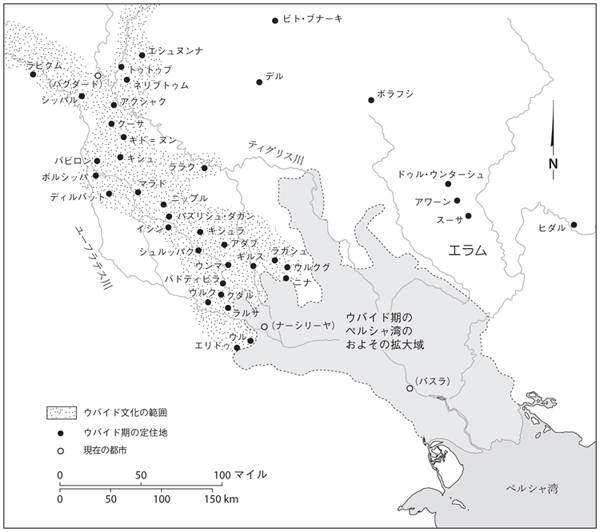
 メソポタミア沖積層──紀元前6500年頃のペルシャ湾拡大。本書図8より(資料:ジェニファー・パーネル)。

しかも、かつて平坦であったその地一帯は、ティグリス=ユーフラテス川の氾濫原でもあった。そのように、メソポタミアに最初に現れた大規模定住地は、海と川の水に接する湿地帯に成立していたのである。

そして、そのような場所に生きる人びとは、「並はずれて豊かな」資源に恵まれていたと考えられる。本文を引用しよう。

ヨシやスゲは家の材料や食料になったし、ほかにも多種多様な可食植物(イグサ、ガマ、スイレン類)があった。主なタンパク源はリクガメ、魚類、軟体動物、甲殻類、鳥類、水禽類、小型哺乳類、そして季節ごとに移住してくるガゼルなどだった。豊かな沖積層の土壌とたっぷりの栄養を(生きたものも死んだものも)含んだ二つの大河の河口という組み合わせは、並はずれて豊かな水辺の生活を生み出し、膨大な数の魚類、ミズガメ、鳥類、哺乳類──そしてもちろん人間!──などが、食物連鎖の下位にいる生きものを食べようと、引き寄せられてきた。紀元前6000年代から5000年代の温暖で湿潤な条件の下で、野生の生業資源は多様で、最も豊富で、安定していて、しかも回復力があった。狩猟採集民や遊牧民にとってはほぼ理想的だった。”

著者によれば、そうした湿地の豊かな資源を基盤として、初期の大規模定住は成り立っていた。もちろん、そこで簡単な農業(とくに「氾濫農法」)が行われていた可能性は十分にある。しかし、それで得られる食料はあくまでも「追加的な」ものにすぎなかったはずだ。「要するに、採集できる野生の食物がふんだんにあり、毎年水鳥やガゼルが渡ってきて狩りができているあいだは、わざわざリスクを冒して、労働集約的な農耕や家畜の飼育に大きく依存する理由は──ましてやそれだけに依存してしまう理由は──まったく考えられなかったということだ」。
 

そして国家の誕生

以上が、本書第1章のハイライトである。たった1章だけでもこれほど濃密な議論が繰り広げられているのだから驚きであろう。そしてすでに述べたように、本書ではそれ以降も刺激的な議論が展開されている。作物化された植物と家畜化された動物とともに人類が新たに直面した危機とは何だったのか(第3章)。初期の国家が穀物以外に必要としていた条件とは何か(第4章)。そして、それらの国家がつねに抱えていた脆弱性とはどんなものだったのか(第6章)。興味深いトピックが次から次へと繰り出されていて、著者のほとばしる熱量を感じずにはいられない。

本書には、「ドムス複合体」や「複数種再定住キャンプ」といった独特な用語が登場する。また、直喩的な文章やレトリックも、この著者ならではのものだろう。最初はそれらになかなか馴染めなくて、砂を噛んでいるように思うかもしれない。だが、時間をかけて慎重に議論をたどっていけば、いつしかそれらの表現もじつに巧いものだと得心できるはずだ。本書を堪能するうえでのアドバイスがあるとすれば、それは「じっくり読め」だろう。

紹介がずいぶん長くなってしまったが、多くの字数を費やしても誰かに語りたくなるのが本書である。専門家の間でどう評価されるのかはわからない。ただ、本書が専門家以外の読者に新たな可能性を垣間見せてくれることは、まず間違いないように思われる。

Top Pageへ

ひょんなことから、発見したKenの記事。どこにいて何をしてるかはSNSで知る。ときどきSNS側から「友達になりませんか?」とお誘いが来るけど「友達じゃないしなぁ・・・」と笑う。何か伝えると、質問すると、頼むと、とりあえず間髪を入れず(海外にいるときでも!?)返事をくれる。
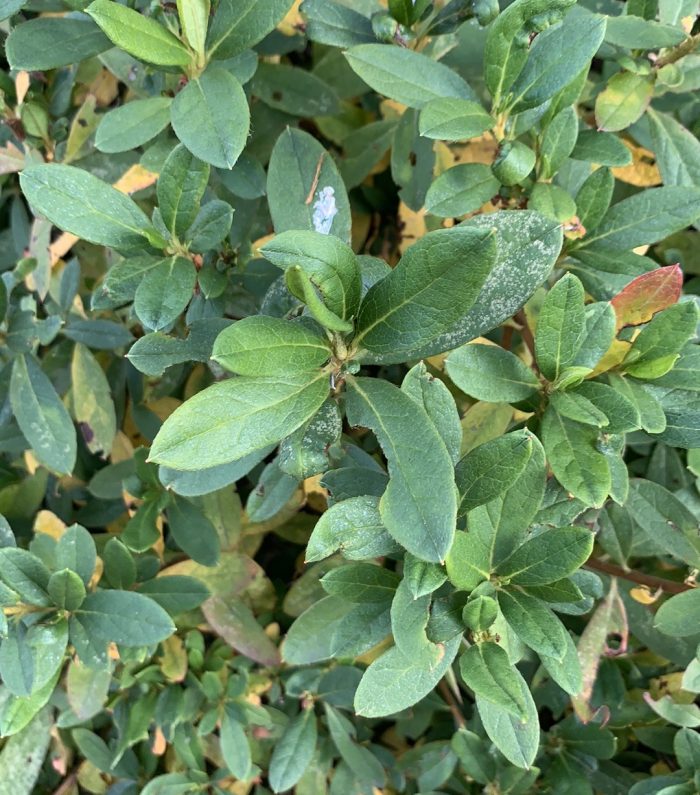


こちらの最新刊は女性の(きっと優秀な)スタッフさんが書いたという。ただし、長年研究している専門家に対してどうなのかなぁとは思う。
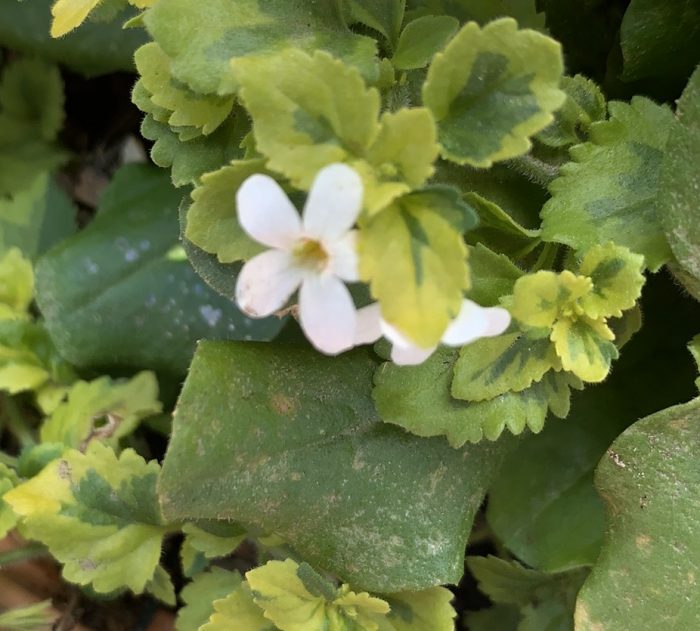
 とりあえず、思ったようにやればいいと思う。


みずほ銀行サイトほか(つづき) 2020.2月~5月


旅に出るきっかけになった本 (for ANA) 2020 June

ANA 記事【1日目 14:30】“多島美”ビューを楽しめる「しまなみコーヒー」へ(大三島)

FULL TEXT

At Ken’s 48’s Birthday

Top Pageへ

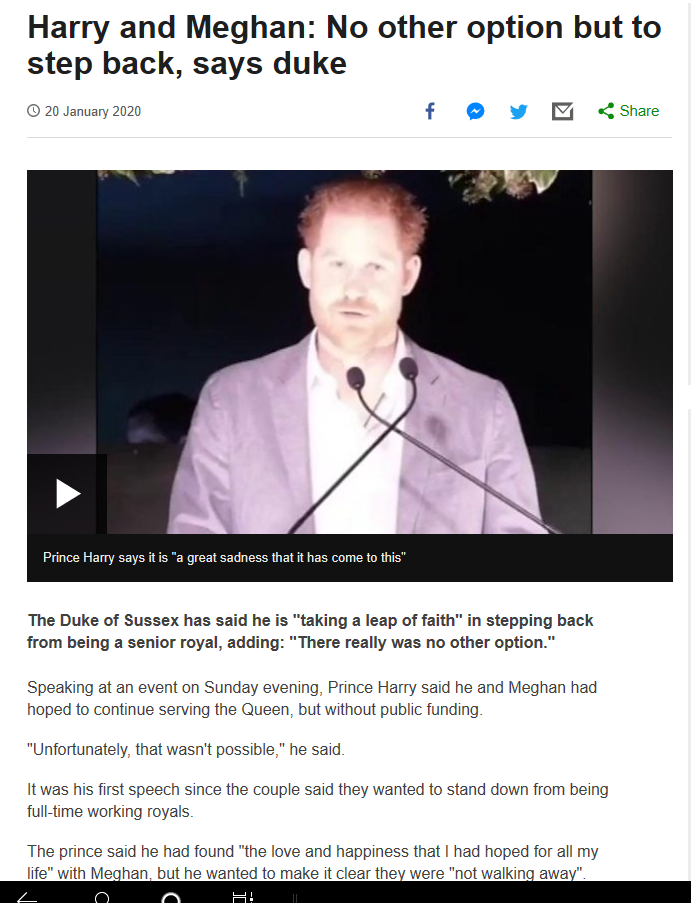
メディアに追い詰められ、自分のIdentityやプライドも捨てざるを得なくなったようだ。後悔と覚悟と。家族を守るための最終決断だというけれど、後悔のない生き方ができればいいのだが、、、、。

Duke and Duchess of Sussex

Lawyers say the photos of the duchess walking her dogs and carrying her son were taken by photographers hiding in bushes and spying on her. They say she did not consent and accuse the photographers of harassment. The couple say that they are prepared to take legal action.

たくさんいる私のFB友人でこの話題を採り上げる人は皆無!こんなことに時間を使うのはムダと思っているようだ(私も!?)


・・・と思ったら、ひとりだけ反応した人がいた!

Dush-san

新聞も!

東京新聞 2020.1.28

Top Pageへ

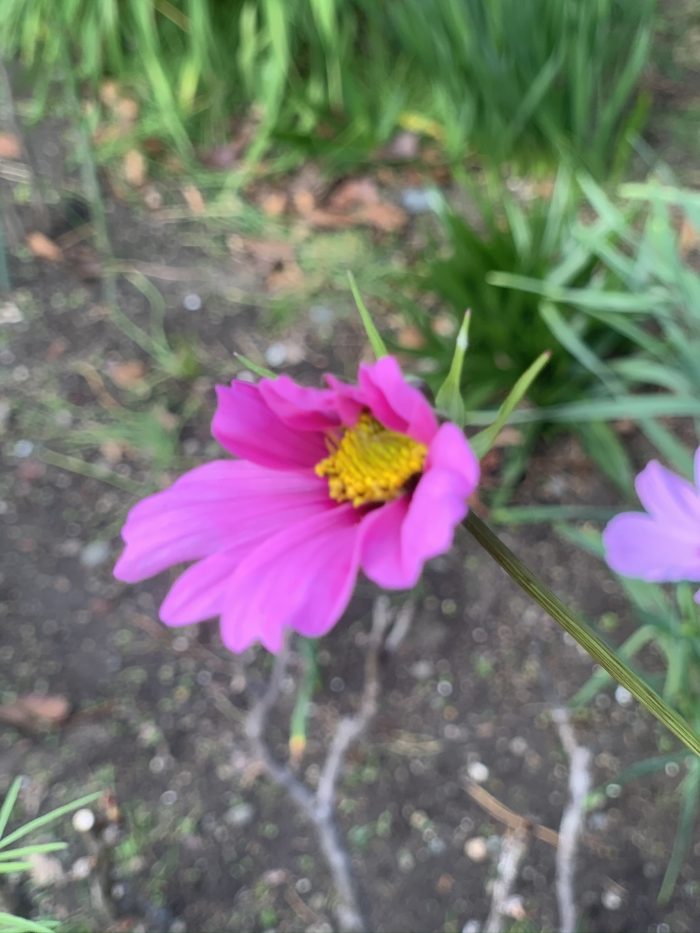
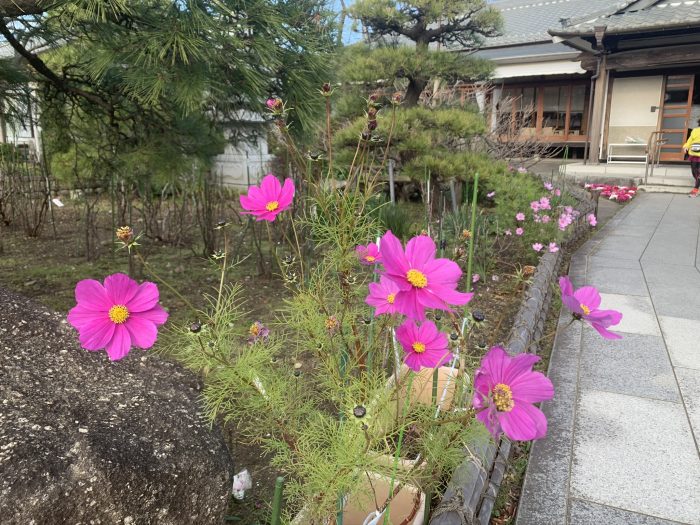
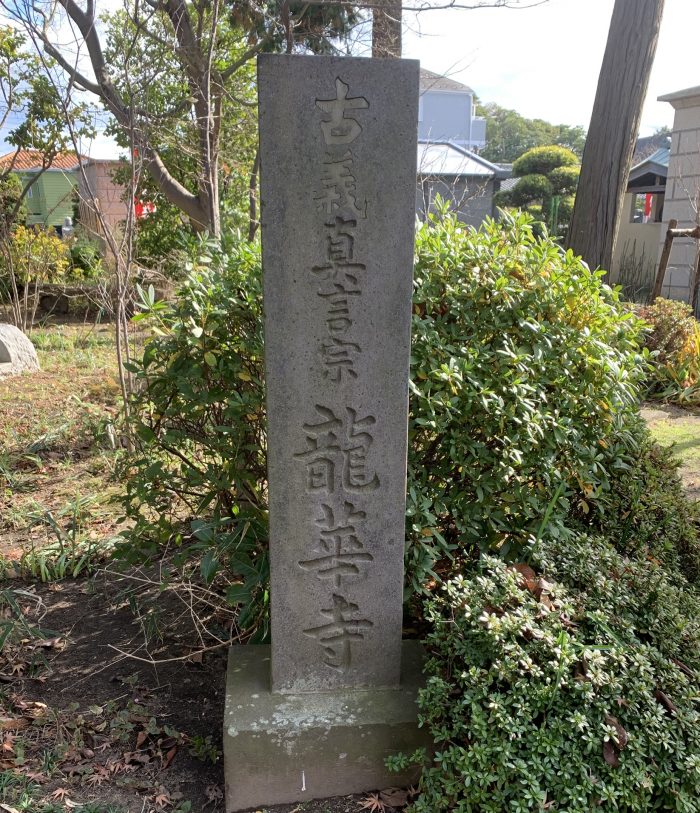
年末で忙しい。なのに毎日のようにお出かけの予定や、仕事(メールでの)も・・。Museの仕事が2個、大学のG先生宅訪問。そして今日は美容室。思ったより早く終わったので「忙中閑あり」龍華寺へ。コスモスが咲いてると聞いたので・・・。


Top Pageへ


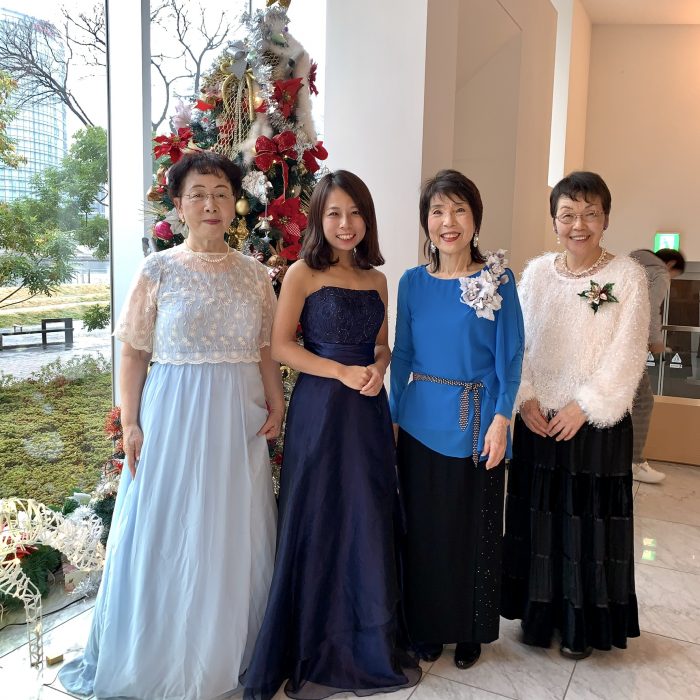
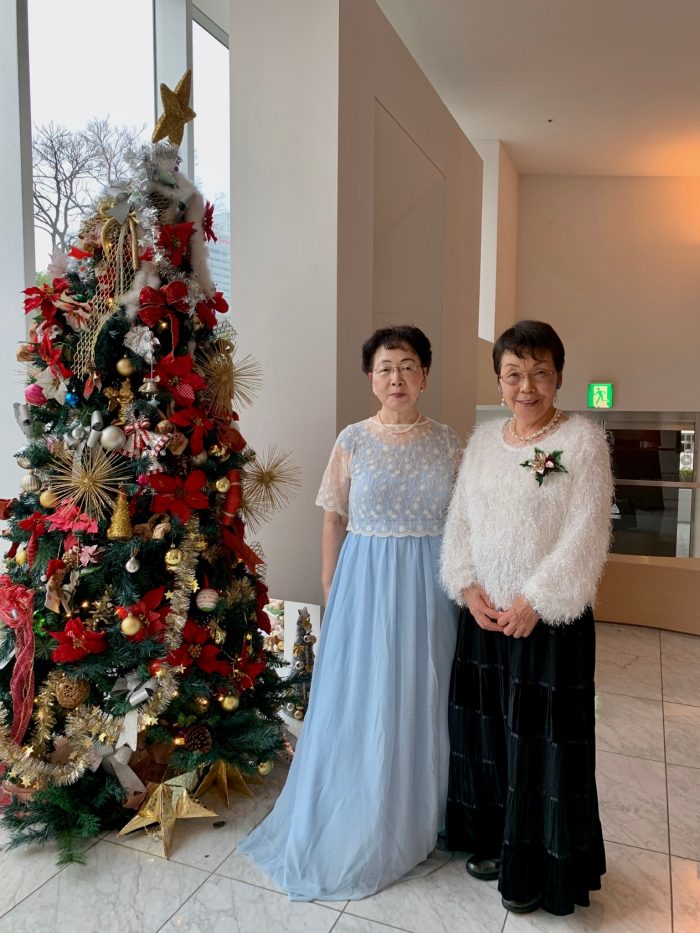
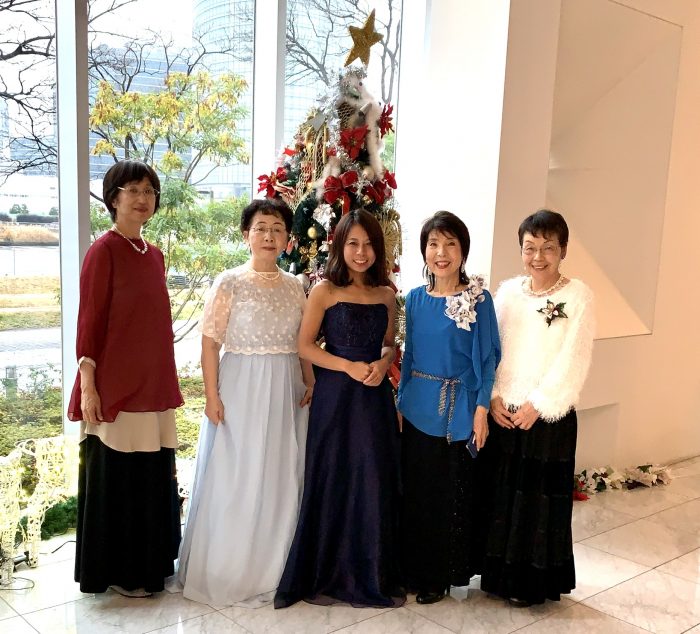
 2019年の演奏・出演は、大小11回。最後は力尽きた感じがして、集中できなかった。まず、チャレンジする気持ちが弱かったので歌詞を覚えなくても良い曲を選んだ(くるみ割り人形の楽曲の歌詞を覚えるのに精いっぱいなのが分かっていた。練習はしたが(100回以上は歌った)上達しなかった。先生も出来は良くなかったと言ってたという。受け入れるしかない。次は時間と体力と環境を考え、歌いたい歌だけ歌おうと決めた。きれいな写真が撮れて、それだけでもとても良かった!!

<2019演奏の記録>

Top Pageへ

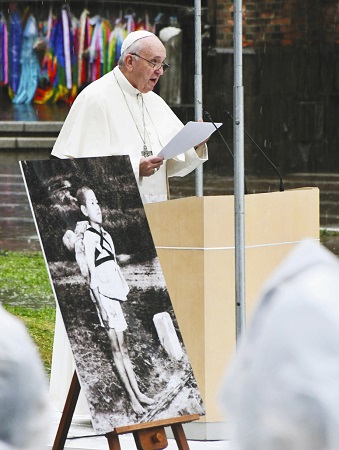
「 わたしは平和の巡礼者として、この場所を訪れなければならないと感じていました。激しい暴力の犠牲となった罪のない人々を思い出し、現代社会の人々の願いと望みを胸にしつつ、静かに祈るためです 。原子力の戦争目的の使用は倫理に反します。より正義にかなう安全な社会を築きたいと真に望むならば、武器を手放さなければなりません 」・・長い祈りの人生から発せられた〝真理”,〝真実のことば”に、心を動かされら人がきっと多いと思う。

戦争はもういらない! こんな苦しみはもういらない!

 神に向かい、すべての善意の人に向かい、一つの願いとして、原爆と核実験とあらゆる紛争のすべての犠牲者の名によって、声を合わせて叫びましょう。戦争はもういらない! 兵器の轟音(ごうおん)はもういらない! こんな苦しみはもういらない!と。わたしたちの時代に、わたしたちのいるこの世界に、平和が来ますように。神よ、あなたは約束してくださいました。「いつくしみとまことは出会い、正義と平和は口づけし、まことは地からもえいで、正義は天から注がれます」(詩編85・11―12)。

 主よ、急いで来てください。破壊があふれた場所に、今とは違う歴史を描き実現する希望があふれますように。平和の君である主よ、来てください。わたしたちをあなたの平和の道具、あなたの平和を響かせるものとしてください!わたしの兄弟と仲間と、そしてあなたと共に、わたしは「平和」といいます。


Full text of pope’s message in Hiroshima

Pope Francis arrives at the Peace Memorial Park in Hiroshima on Nov. 24, 2019. (Kyodo)

Pope Francis arrives at the Peace Memorial Park in Hiroshima on Nov. 24, 2019. (Kyodo)

HIROSHIMA (Kyodo) — The following is the official translation of the full text of a message Pope Francis delivered Sunday in an address in Hiroshima.

“For love of my brethren and friends, I say: Peace upon you!” (Ps 122:8).

God of mercy and Lord of history, to you we lift up our eyes from this place, where death and life have met, loss and rebirth, suffering and compassion.

Here, in an incandescent burst of lightning and fire, so many men and women, so many dreams and hopes, disappeared, leaving behind only shadows and silence. In barely an instant, everything was devoured by a black hole of destruction and death. From that abyss of silence, we continue even today to hear the cries of those who are no longer. They came from different places, had different names, and some spoke different languages. Yet all were united in the same fate, in a terrifying hour that left its mark forever not only on the history of this country, but on the face of humanity.

Here I pay homage to all the victims, and I bow before the strength and dignity of those who, having survived those first moments, for years afterward bore in the flesh immense suffering, and in their spirit seeds of death that drained their vital energy.

I felt a duty to come here as a pilgrim of peace, to stand in silent prayer, to recall the innocent victims of such violence, and to bear in my heart the prayers and yearnings of the men and women of our time, especially the young, who long for peace, who work for peace and who sacrifice themselves for peace. I have come to this place of memory and of hope for the future, bringing with me the cry of the poor who are always the most helpless victims of hatred and conflict.

It is my humble desire to be the voice of the voiceless, who witness with concern and anguish the growing tensions of our own time: the unacceptable inequalities and injustices that threaten human coexistence, the grave inability to care for our common home, and the constant outbreak of armed conflict, as if these could guarantee a future of peace.

With deep conviction I wish once more to declare that the use of atomic energy for purposes of war is today, more than ever, a crime not only against the dignity of human beings but against any possible future for our common home. The use of atomic energy for purposes of war is immoral. We will be judged on this. Future generations will rise to condemn our failure if we spoke of peace but did not act to bring it about among the peoples of the earth. How can we speak of peace even as we build terrifying new weapons of war? How can we speak about peace even as we justify illegitimate actions by speeches filled with discrimination and hate?

I am convinced that peace is no more than an empty word unless it is founded on truth, built up in justice, animated and perfected by charity, and attained in freedom (cf. St. John XXIII, Pacem in Terris, 37).

Building peace in truth and justice entails acknowledging that “people frequently differ widely in knowledge, virtue, intelligence and wealth” (ibid., 87), and that this can never justify the attempt to impose our own particular interests upon others. Indeed, those differences call for even greater responsibility and respect. Political communities may legitimately differ from one another in terms of culture or economic development, but all are called to commit themselves to work “for the common cause,” for the good of all (ibid., 88).

Indeed, if we really want to build a more just and secure society, we must let the weapons fall from our hands. “No one can love with offensive weapons in their hands” (St. Paul VI, U.N. Address, Oct. 4, 1965, 10). When we yield to the logic of arms and distance ourselves from the practice of dialogue, we forget to our detriment that, even before causing victims and ruination, weapons can create nightmares; “they call for enormous expenses, interrupt projects of solidarity and of useful labor, and warp the outlook of nations” (ibid.).

How can we propose peace if we constantly invoke the threat of nuclear war as a legitimate recourse for the resolution of conflicts? May the abyss of pain endured here remind us of boundaries that must never be crossed. A true peace can only be an unarmed peace. For “peace is not merely the absence of war…but must be built up ceaselessly” (Gaudium et Spes, 78). It is the fruit of justice, development, solidarity, care for our common home and the promotion of the common good, as we have learned from the lessons of history.

To remember, to journey together, to protect. These are three moral imperatives that here in Hiroshima assume even more powerful and universal significance, and can open a true path to peace. For this reason, we cannot allow present and future generations to lose the memory of what happened here. It is a memory that ensures and encourages the building of a more fair and fraternal future; an expansive memory, capable of awakening the consciences of all men and women, especially those who today play a crucial role in the destiny of the nations; a living memory that helps us say in every generation: never again!

That is why we are called to journey together with a gaze of understanding and forgiveness, to open the horizon to hope and to bring a ray of light amid the many clouds that today darken the sky. Let us open our hearts to hope, and become instruments of reconciliation and peace. This will always be possible if we are able to protect one another and realize that we are joined by a common destiny. Our world, interconnected not only by globalization but by the very earth we have always shared, demands, today more than ever, that interests exclusive to certain groups or sectors be left to one side, in order to achieve the greatness of those who struggle co-responsibly to ensure a common future.

In a single plea to God and to all men and women of good will, on behalf of all the victims of atomic bombings and experiments, and of all conflicts, let us together cry out: Never again war, never again the clash of arms, never again so much suffering! May peace come in our time and to our world. O God, you have promised us that “mercy and faithfulness have met, justice and peace have embraced; faithfulness shall spring from the earth, and justice look down from heaven” (Ps 84:11-12).

Come, Lord, for it is late, and where destruction has abounded, may hope also abound that we can write and achieve a different future. Come, Lord, Prince of Peace! Make us instruments and reflections of your peace!


Pope Francis in Nagasaki says world without nuke arms ‘possible, necessary’ November 24, 2019 (Mainichi Japan)


Pope wants to officialize immorality of nuke arms possession

THE ASSOCIATED PRESS November 28, 2019 at 07:30 JST

Photo/Illutration

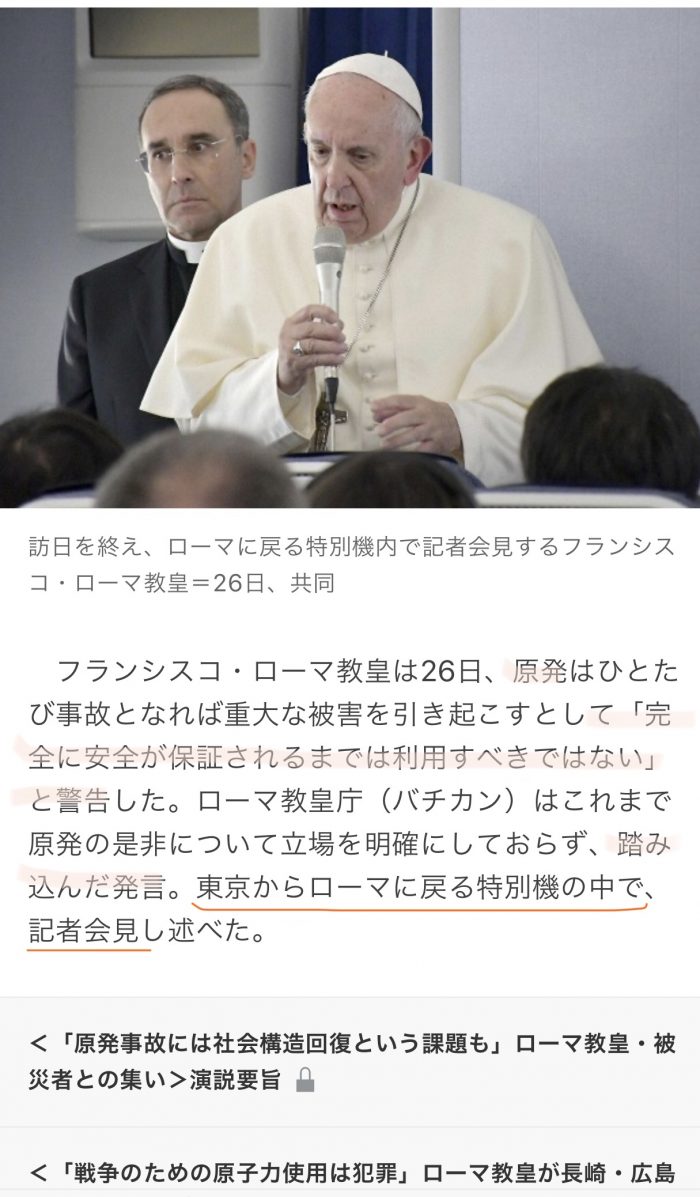
Pope Francis speaks during a news conference onboard the papal plane on his flight back from a trip to Thailand and Japan on Nov. 26. (Pool Photo via AP)

ABOARD THE PAPAL PLANE–Pope Francis is planning to change official Catholic Church teaching to declare the use and possession of atomic weapons as “immoral,” a move that makes clear that his rejection of the Cold War-era doctrine of deterrence is to be official church policy.

Francis had declared the possession of nuclear weapons immoral on Sunday in Hiroshima during an emotional encounter with survivors of the U.S. atomic bomb.

On Tuesday, during a press conference en route home from Japan, Francis indicated that his Hiroshima address should be considered part of his magisterium, or official church teaching.

“This must go in the Catechism of the Catholic Church,” he said, referring to the published compendium of official church teaching.

“Not just the use, also the possession,” he said. “Because an accident of possession, or the insanity of a leader or someone, can destroy humanity.”

Francis first articulated his opposition to the doctrine of deterrence in 2017, during a Vatican conference, when he said the possession of nuclear weapons was “to be condemned.”

The shift upended three decades of the Vatican’s tacit acceptance of nuclear arsenals. Starting in 1982, St. John Paul II had held that deterrence could be morally acceptable in the interim as long as it was used as a step toward mutual, verifiable disarmament.

In the ensuing years, however, the Holy See has watched as arms control treaties collapsed, new nuclear powers emerged and the policy of assured mutual destruction resulted in a permanent stockpiling of bombs.

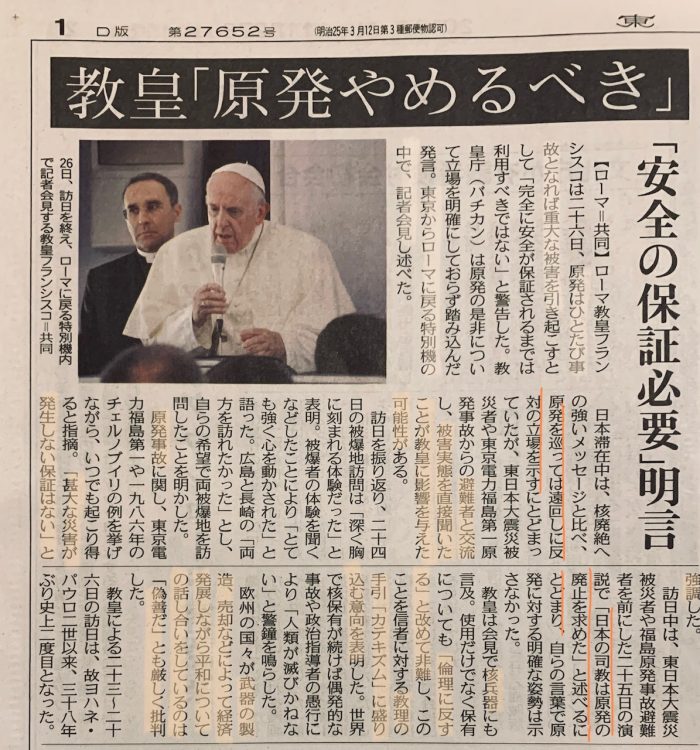
Francis also went further Tuesday in his comments on nuclear energy, saying he would rule out its use until scientists can offer “total security” to ensure that accidents, natural disasters and “crazed” individuals won’t destroy humanity and the environment with nuclear fallout.

Francis offered his “personal opinion” that went beyond the “concern” he expressed in public a day earlier during a meeting with survivors of the 2011 Fukushima nuclear disaster.

The Japanese government strongly backs nuclear energy despite the 2011 “triple disaster,” in which three Fukushima nuclear reactors partially melted down after an earthquake triggered a tsunami. The disaster spewed nuclear fallout across the region and at one point forced the evacuation of 160,000 people.

“I have a personal opinion,” Francis said. “I would not use nuclear energy as long as there’s not a total security on the use.”

Top Pageへ

わ!まだ「迷惑さん」が存在感をだした。TVや新聞に載るたび目を背けつつ覗いていたけど・・・。悪名高い「桜を見る会」を裏からチェック!

「女性自身」(?)

急展開! 11/27

どんどん、佳境に入ってきました!

12/4 までの状況を網羅!!

12/10 まだまだ続く「桜を見る会」・・・これがAbeへのトドメとなるか!石川教授の「民主主義の問題を考えるのに、”桜を見る会”問題より本質的な問題はどこにあるのか!!」がすばらしい。


「桜を見る会」考(毎日新聞)・・・・「桜を見る会」が単なるAkieの推薦枠の問題ではないことが明らかになっていく。

サクラ問題で最も切込みが鋭い美奈子さんに再登場してもらおう(2020/11/25)


2021/1/15 Minako-san, Wonderful!
森喜朗の時代錯誤 2021/2/10
スガの新型コロナ対策 2021/9/9

サクラ問題の大展開 こちら

Cover天皇退位と憲法問題

Top Pageへ